Inspect the release, not just the manifest.
Identify components in compiled firmware and follow the evidence behind each match. Keep confirmed identities, inferred matches, and unresolved components visible during review.
PRODUCT SECURITY / FIRMWARE & SOFTWARE SUPPLY CHAINS
Ship with answers.
Analyze firmware and third-party binaries, investigate vulnerabilities, and review supplier changes in one AI-assisted platform. Keep findings tied to evidence your team can inspect.
Explore a saved product example before sharing your own firmware.
SEE THE WORK. NOT JUST THE CLAIM.
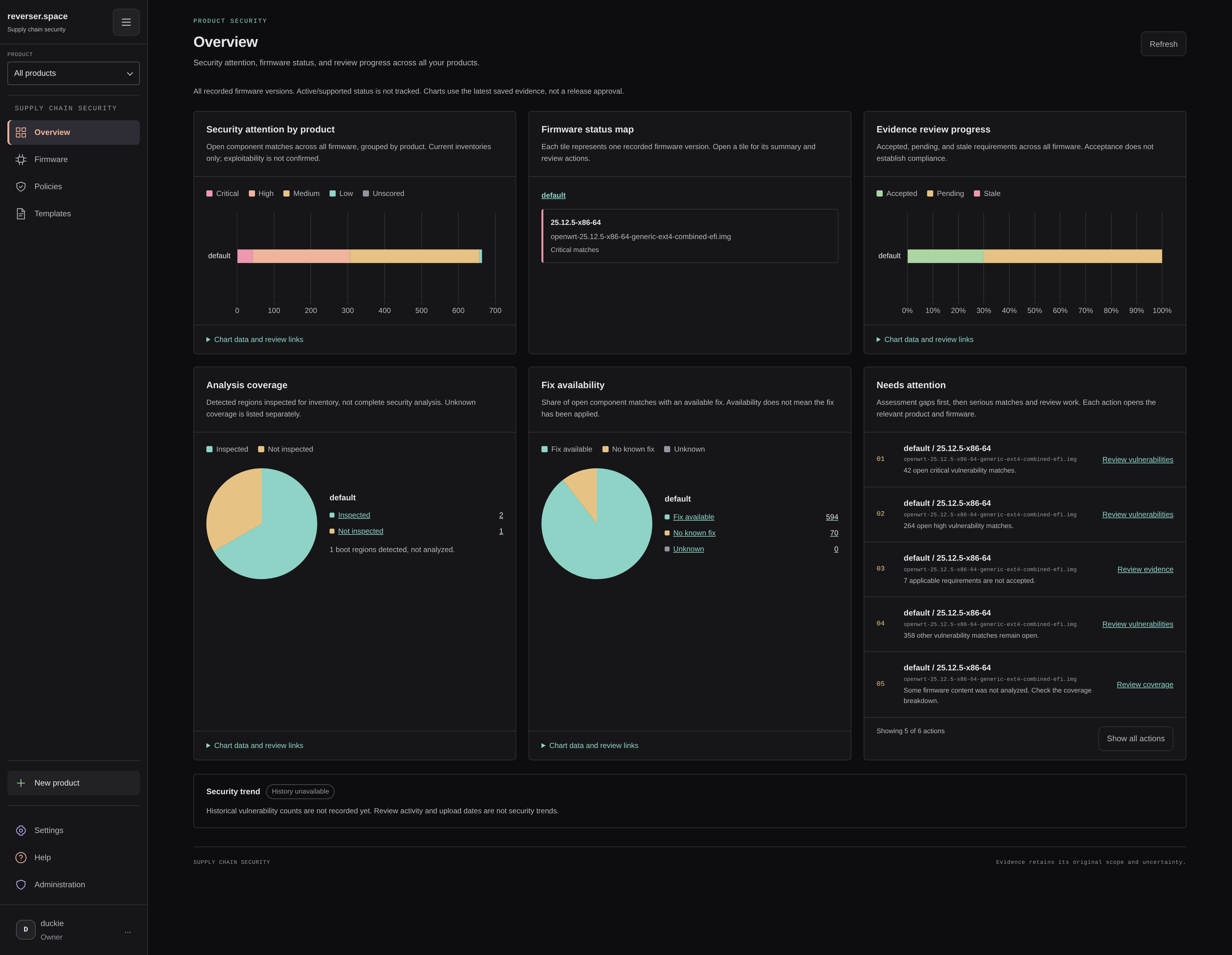
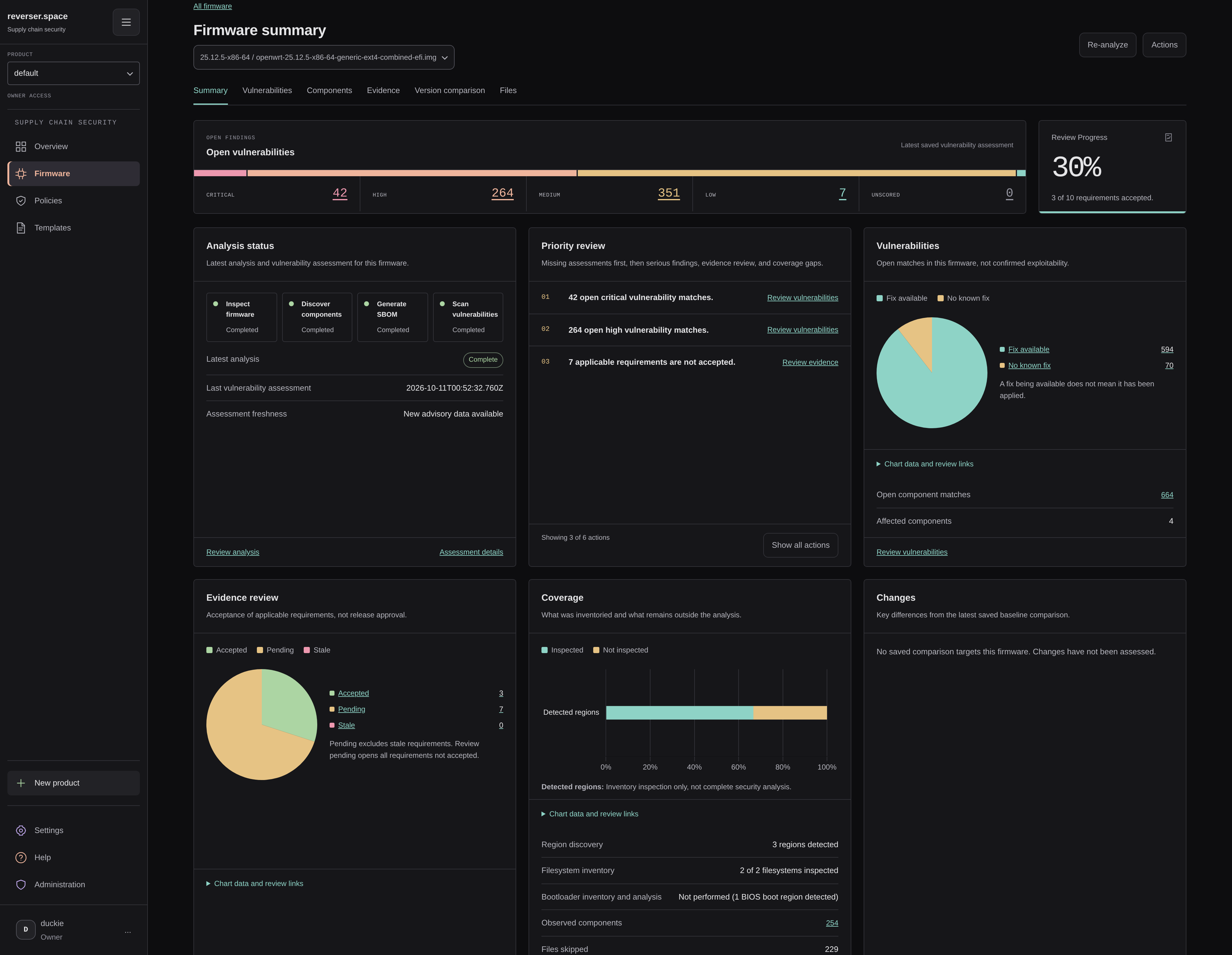
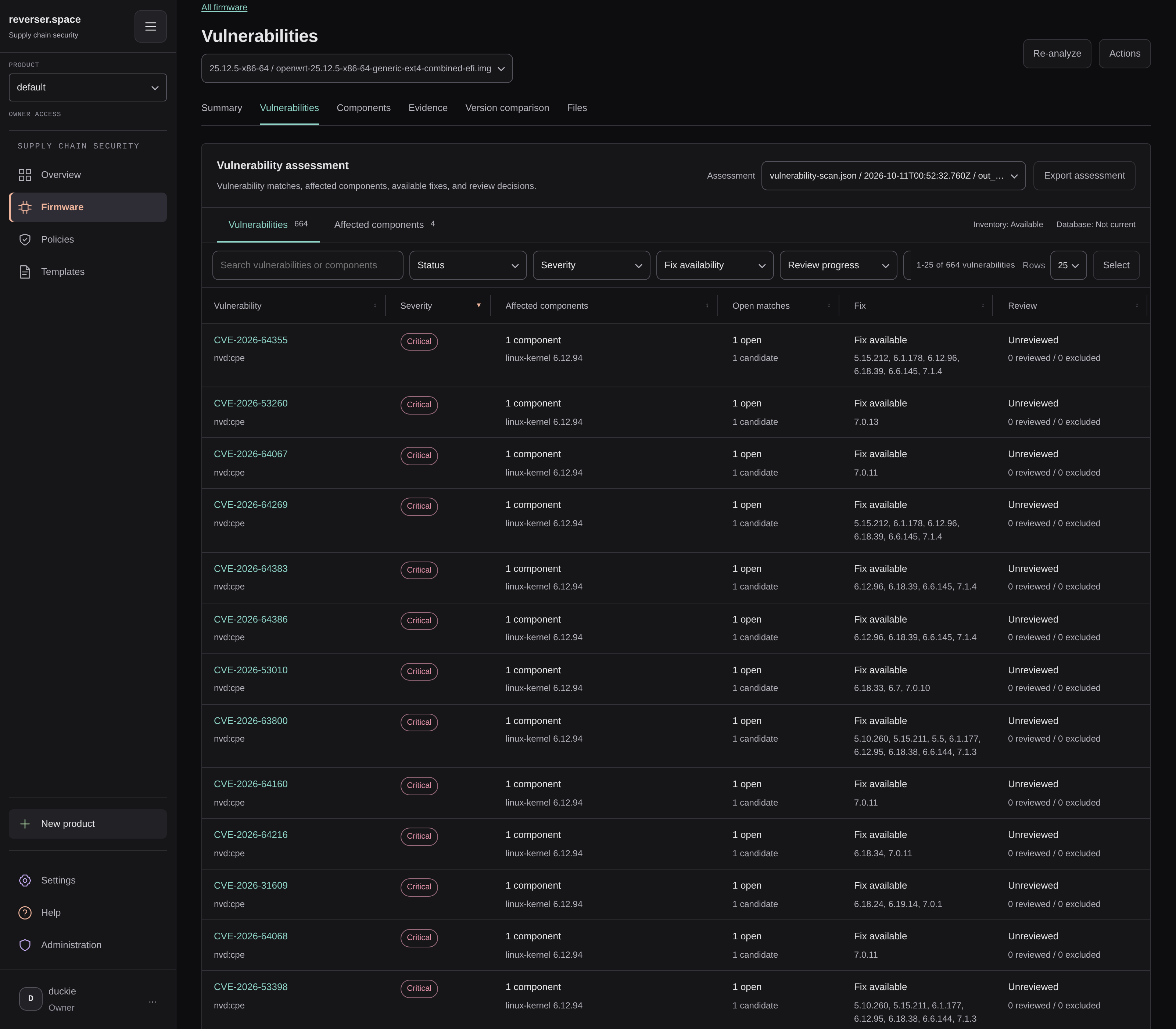
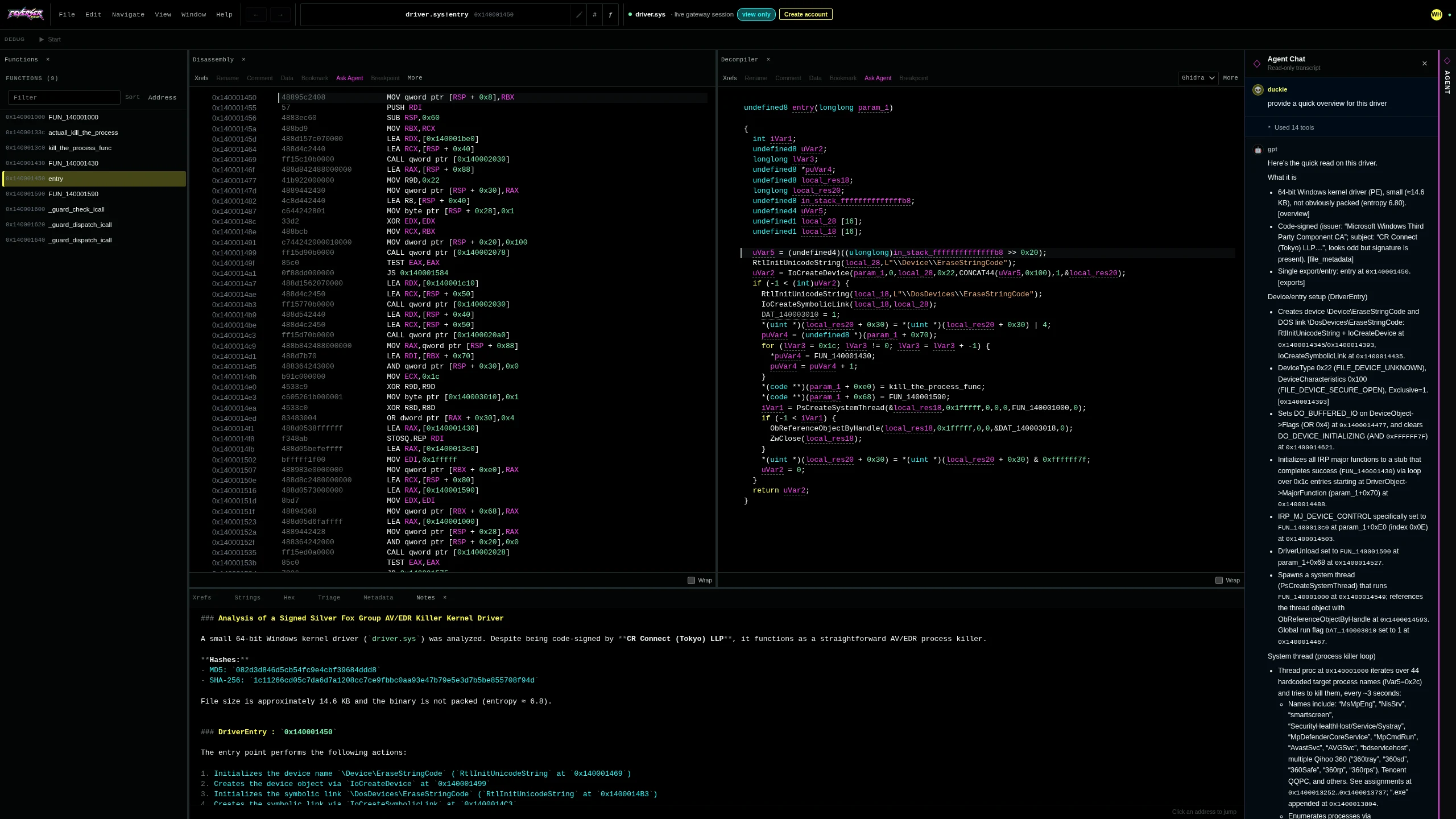
ONE PLATFORM FOR FIRMWARE SECURITY WORK
Bring component discovery, supplier verification, vulnerability review, and binary investigation into the same workflow.
Identify components in compiled firmware and follow the evidence behind each match. Keep confirmed identities, inferred matches, and unresolved components visible during review.
Compare supplier releases, inspect modified dependencies, and investigate changes that release notes do not fully explain.
Review component matches alongside the code behind suspected weaknesses. Save your findings, applicability decisions, and remaining questions with the analysis.
Build component inventories from the firmware under review. Compare supplier declarations with observed components and retain the evidence behind your findings.
WHEN THE NEXT DECISION CANNOT WAIT
A supplier update. A new vulnerability. A customer asking for proof. Start with the firmware in front of you and work toward a decision your team can explain.
Compare releases, inspect changed components, and investigate differences before accepting the update.
Review relevant components, inspect supporting evidence, and record what is confirmed and what still needs investigation.
Bring component records, SBOM differences, and saved findings into one reviewable assessment.
Keep software records, SBOMs, security findings, and remediation notes organized for release reviews, supplier discussions, and EU Cyber Resilience Act preparation.
Review the hosted product or discuss a dedicated managed or on-premises deployment. Agree on access, data handling, supported artifacts, and deployment requirements before sharing sensitive software.
The code, the findings, and your team's corrections stay together.
AI-ASSISTED ANALYSIS. HUMAN-REVIEWABLE RESULTS.
Use agents to investigate binary code with real analysis tools. Inspect their work, correct a finding, and continue the investigation in a shared workspace with the context preserved.

Build me a triage queue for 25.12.5-x86-64. Which advisory matches need review first?
The assessment contains 664 advisory matches across all review states and 664 open component matches. Prioritize severe matches with an available fix, then confirm affected versions and record applicability before release.
Priority queue / Affected versions / Review decisions
Candidate matches need applicability review
OpenWrt / 25.12.5-x86-64
Open component matches    664
Advisory matches           664
Critical open matches       42
High open matches          264
Open matches are candidate occurrences. Confirm the affected version and saved evidence before recording a review decision.
Open the sample assessmentA saved Windows driver investigation, with code, agent findings, and analyst notes side by side.
Getting started
No source code is required to begin a supported firmware or binary assessment. Coverage depends on the architecture, loader, packaging, encryption, and available evidence.
No. A match identifies a question for review. Your team should check component identity, the affected version, and relevant evidence before recording applicability.
The workspace brings code, findings, analysis activity, and saved notes together so your team can review the supporting evidence and correct the analysis.
Reverser Space helps your team work toward EU Cyber Resilience Act (CRA) compliance. Identify firmware components, build evidence-backed SBOMs, investigate vulnerabilities, and keep findings and remediation notes organized for your compliance assessment and technical documentation.
Hosted access is the standard experience. Dedicated managed and on-premises requirements can be discussed during a team evaluation.
EU Cyber Resilience Act (CRA): reporting obligations for actively exploited vulnerabilities and severe security incidents apply from . The main obligations apply from . See the European Commission's CRA timeline
See how Reverser Space brings component evidence, supplier changes, and binary investigation into one product-security workflow.